AfDB Report Says Liberia Among Africa’s Fastest-Growing Economies As Finance Minister Ngafuah Touts Economic Resilience
Finance and Development Planning Minister Augustine Kpehe Ngafuan says Liberia has become adept at managing crises and emerging stronger, pointing to debt relief, fiscal reforms, and resilience in the face of donor withdrawal as evidence of economic stability. Speaking at the launch of the African Development Bank’s Macroeconomic Performance and Outlook 2026 Report in Abidjan, Ngafuan who is Governor on the Board of the AfDB and Chairman of AfDB Constituency 15 which comprises of Ghana, Gambia, Sudan, Sierra Leone, and Liberia, underscored Liberia’s progress despite recurring shocks.
“The sky did not collapse on our heads,” he said, crediting improved tax administration, digitization, and transparency for helping the country maintain stability after the abrupt loss of more than $300 million in external project financing last year. The AfDB report shows Africa remains on track to be one of the fastest-growing regions globally, with 12 of the world’s 20 fastest-growing economies in 2026. Liberia is among 22 African countries that recorded growth above 5 percent in 2025. The report noted that growth was broad-based, with stronger performance in 32 of 54 countries. Ngafuan joined a panel of finance ministers and senior policymakers, including Dr. Retselisitsoe Adelaide Matlanyane of Lesotho, Dr. Adama Coulibaly of Côte d’Ivoire, Professor Mthuli Ncube of Zimbabwe, and Mme Aminata Touré of the International Monetary Fund.
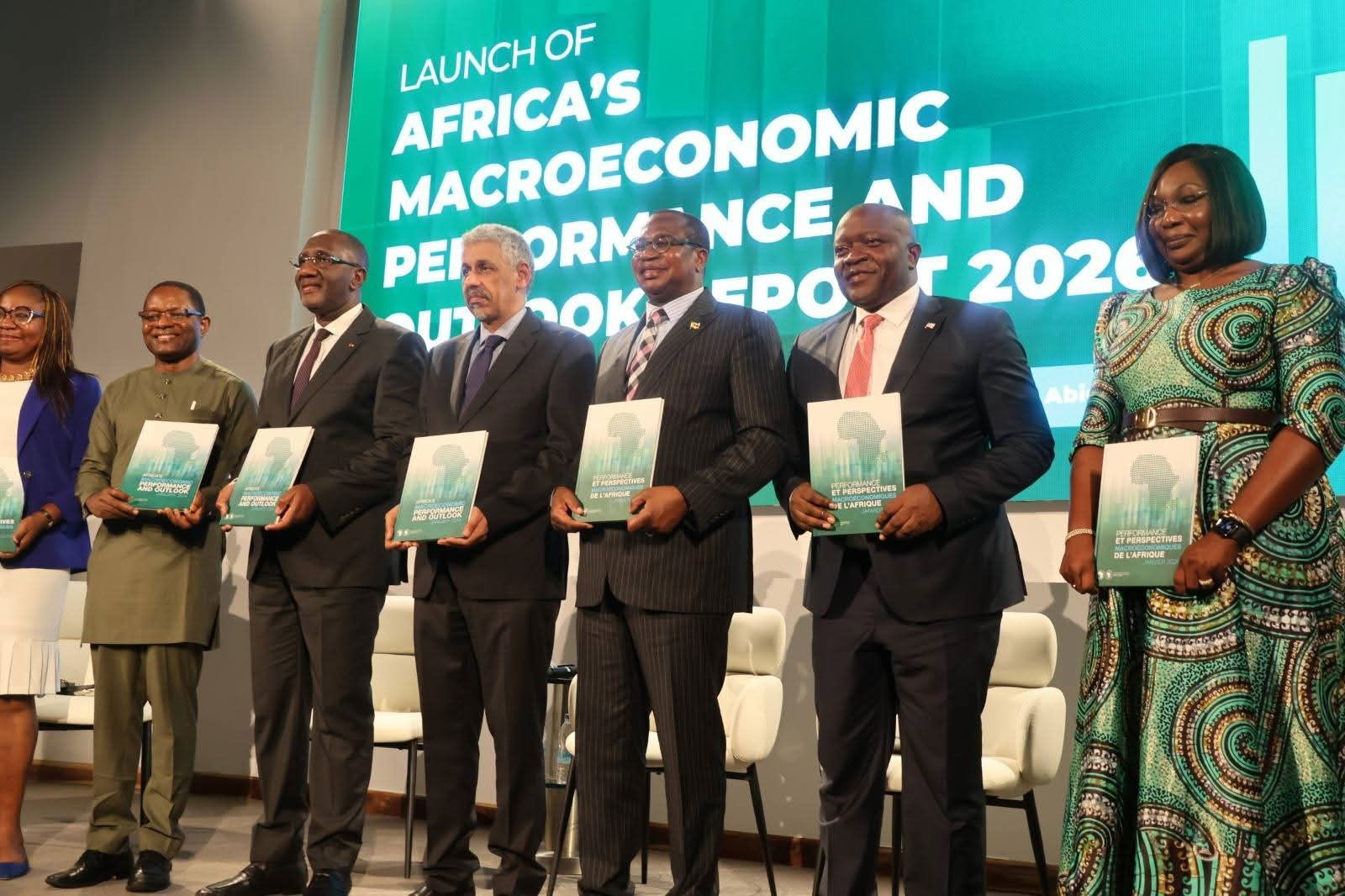
He emphasized Liberia’s progress despite its relatively small population of just over five million. Recalling Liberia’s postwar debt crisis, Ngafuan said obligations once soared to more than 700 percent of GDP. Sustained reforms and international cooperation secured relief for nearly 90 percent of that debt, laying the foundation for stability. “Through sustained reform efforts and strong international cooperation, the country successfully secured debt relief covering nearly 90 percent of its obligations,” he said. He also reflected on the toll of the Ebola epidemic, which claimed more than 5,000 lives. Ngafuan argued the crisis strengthened institutions and improved the country’s response to COVID-19. “The experience strengthened Liberia’s institutional capacity, enabling a more effective response to the COVID-19 pandemic and mitigating its overall economic and social impact,” he said.
Liberia’s economy grew 5.1 percent last year and is projected to expand by 5.6 percent in 2026. Inflation fell to 4 percent by the end of 2025, with January 2026 figures slightly above 3 percent. Still, Ngafuan warned of new pressures: “While we remain confident, the reality is that rising prices are already affecting the poor.” He pointed to fuel costs as a driver of inflation and said the government is supporting the national petroleum refinery and expanding social protection programs to cushion households. The Finance Minister also highlighted reforms in the mining sector, noting that while it has been a major growth driver, revenues have lagged behind private earnings.
“While mining has been a major driver of economic growth, contributing the largest share to GDP growth in the past year, revenues from the sector have historically remained relatively low compared to what private entities and multinationals in the sector earn,” he said. Current reforms, he added, are aimed at addressing these disparities and ensuring that natural resource wealth delivers tangible benefits to the Liberian people. Ngafuan told the gathering that Liberia achieved its highest-ever domestic revenue collection and recorded a small budget surplus. He attributed the achievement to improved tax administration, enhanced digitization, increased transparency, and efforts to eliminate revenue leakages. “These reforms remain central to the government’s broader development agenda, including the implementation of its national development plan and targeted initiatives to strengthen resource governance,” he said.
The AfDB report situates Liberia’s story within Africa’s broader growth narrative. Despite global headwinds, Africa remains a frontier of opportunity, with growth driven by diverse economies across the continent. The report emphasized that Africa’s resilience is rooted in structural reforms, investment in infrastructure, and stronger regional cooperation. Ngafuah expressed concern about emerging inflationary pressures driven by rising global prices, particularly in fuel and transportation. He warned that recent increases in fuel costs are already impacting the cost of living, especially for vulnerable populations.
“While we remain confident, the reality is that rising prices are already affecting the poor,” he noted. The government, he said, is implementing targeted mitigation measures, including support for the national petroleum refinery and broader social protection initiatives to cushion the impact on households. He also called for strengthened crisis response mechanisms from development partners, including the African Development Bank, to help countries better navigate short-term economic shocks. Despite ongoing challenges, Ngafuan reaffirmed Liberia’s commitment to sustained reform and resilience.
“We have become accustomed to managing shocks, learning from them, and emerging stronger,” he said, while expressing appreciation to the African Development Bank and other partners for their continued support.