SOEs’ Potential Failure to Contribute Puts 2026 US$1.2B Budget at Risk --- House Committee on Ways, Means and Finance Expresses Fear
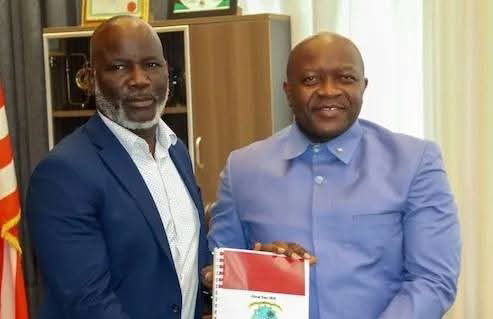
The House of Representatives’ Committee on Ways, Means and Finance has raised serious concerns over the potential failure of State-Owned Enterprises (SOEs) and key revenue-generating agencies to meet their projected contributions to the 2026 National Budget. The alarm follows a series of revenue hearings aimed at scrutinizing the Draft FY2026 Budget, which proposes an unprecedented target of US$1.2 billion. During the hearings, the Committee examined the revenue framework submitted by the Ministry of Finance and Development Planning (MFDP) and the Liberia Revenue Authority (LRA).
The proposed target reflects a massive 36 percent increase over the approved FY2025 budget of US$880.6 million. Domestic revenue collections for FY2026 are expected to reach US$1.11 billion, with an additional US$72 million projected from external sources. However, as of November 17, 2025, actual collections for the current fiscal year stood at US$719 million, leaving a shortfall of US$160 million. This underperformance heightened doubts about the viability of the ambitious 2026 target.
The hearings brought to light several inconsistencies and gaps in reporting by SOEs, prompting the Committee to question the credibility and reliability of the entities responsible for supplying a major portion of domestic revenue. Presentations by the MFDP and LRA emphasized the necessity of enforcing the Tax Amendment Act and the Tax Expenditure Management Act, and they suggested transferring revenue collection responsibilities from underperforming SOEs to the LRA.
The two institutions also highlighted a projected US$10 million for the Assets Recovery Fund but acknowledged concerns about the fund’s feasibility. A particularly troubling revelation emerged from the Liberia Petroleum Refining Company (LPRC), whose FY2025 revenue assessment was placed at US$5 million, yet reported remittances amounted to only US$799,139. Despite this sharp deviation, the company projected an 11.2 million contribution for FY2026. The Committee immediately mandated the LPRC to submit all missing financial statements and levy reports by November 28, 2025.
The Liberia Maritime Authority (LiMA) presented a relatively strong performance, having nearly met its US$14 million assessment for FY2025. However, amid global shipping uncertainties, the Committee resisted MFDP’s recommendation to increase LiMA’s 2026 target to US$20 million, opting instead to maintain the current level. The National Port Authority (NPA) fared poorly, submitting incomplete documentation without audited financial statements for FY2024 and FY2025. The Committee ordered the NPA to resubmit a complete report. Similar presentation deficiencies were observed among several other SOEs and administrative agencies, many of which were forced to return with revised submissions.
Committee members expressed frustration at the lack of financial discipline and transparency across these institutions. They noted that discrepancies in reporting undermine national fiscal planning and weaken confidence in the government’s ability to meet its revenue goals. Several SOEs were identified as needing realistic downward adjustments in their proposed contributions, including the National Fisheries and Aquaculture Authority, the Liberia Telecommunications Authority, and LiMA, whose assessments were described as overly ambitious. Meanwhile, the Liberia National Road Fund Authority came under further scrutiny due to unresolved issues related to the collection of petroleum levy taxes, with importers disputing whether collections should occur at importation or lifting.
Amid the challenges, the hearings also revealed encouraging prospects. The Liberia National Lottery Authority and the Liberia Immigration Service disclosed revenue potentials significantly higher than their current assessments. Additionally, pending legislative ratification of agreements involving Total Energy, Oranto, and INANHOE could unlock new revenue streams not yet reflected in the 2026 budget proposal. The Committee emphasized the need for urgent legislative actions to strengthen revenue mobilization, including passage of the Tax Amendment Act and the Tax Expenditure Management Act. Lawmakers also called for mandatory audits, standardized reporting formats, and punitive measures for SOEs that fail to comply with financial disclosure requirements.
There were further recommendations to adopt conservative forecasting, improve risk-adjusted revenue projections, and establish a Revenue Mobilization Council chaired by the MFDP and comprising the LRA and SOEs. This body would be required to submit quarterly reports to the Legislature to ensure closer monitoring and coordination. While the Committee acknowledged the potential to meet the US$1.2 billion target, it warned that this goal would remain unattainable without swift reforms and stronger accountability.
According to the report, the 2026 revenue forecast risks becoming “aspirational rather than achievable” if SOEs fail to align their performance with national expectations. The preliminary report was jointly endorsed by Representatives Michael M. Thomas, Cochair on Expenditure; Dorwohn T. Gleekia, Cochair on Revenue; and P. Mike Jurry, Chairman of the Ways, Means and Finance Committee. It was formally submitted on November 27, 2025, signaling the Legislature’s intent to enforce tougher oversight in the lead-up to the passage of the FY2026 National Budget.
Author: Zac T. Sherman