Chief Justice Gbeisay Leads Historic Push for Establishment of Liberia’s First Family Court
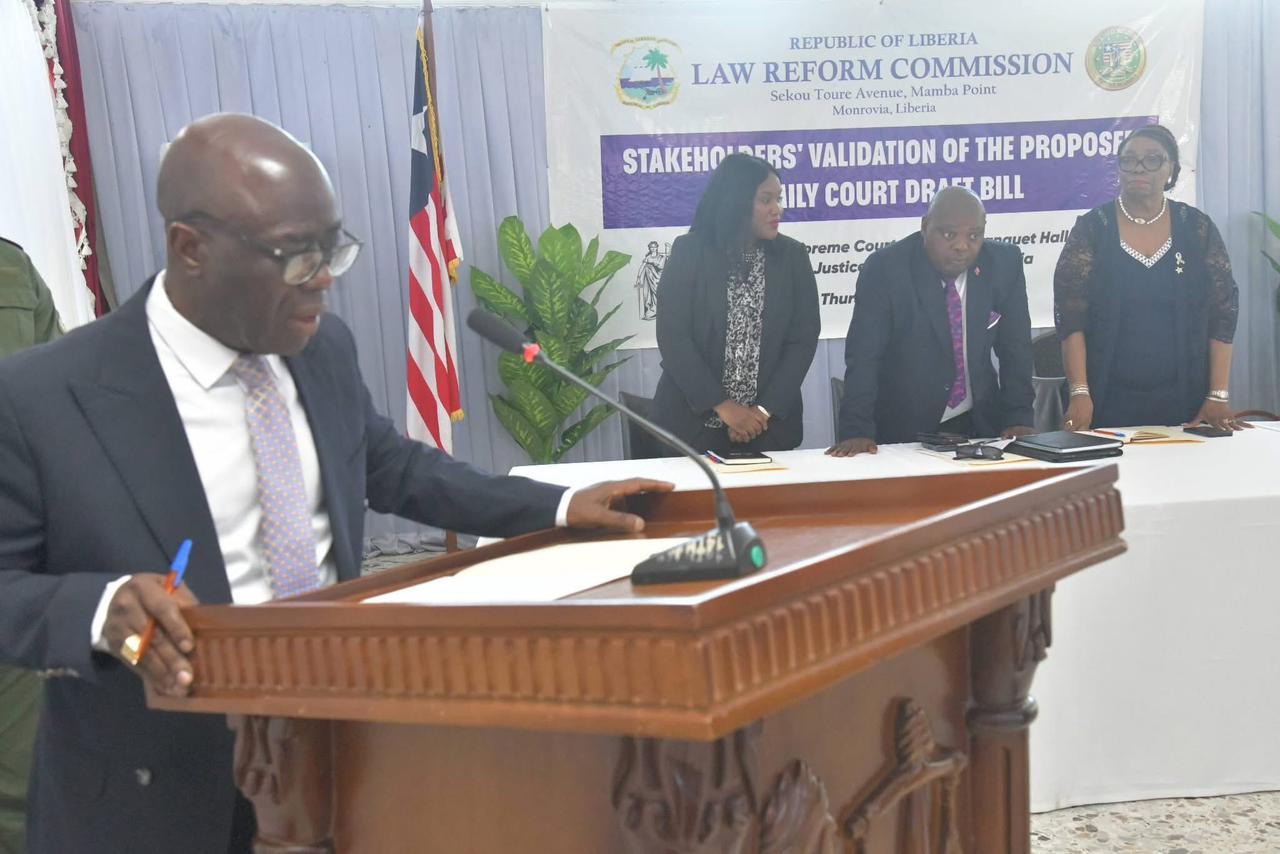
Chief Justice Yamie Quiqui Gbeisay Sr. has described the validation of a proposed Family Court document as a “defining moment” in the history of Liberia’s judiciary, marking a significant step toward improving access to justice for families across the country.
Delivering a keynote address at the document validation program, Chief Justice Gbeisay emphasized that the establishment of a Family Court was a major commitment made during his confirmation hearing before the Liberian Senate—one that the judiciary is now actively working to fulfill. “This is a defining moment in the history of the Judiciary; one that we have all worked exceedingly hard to achieve,” he said, highlighting the importance of the initiative in addressing longstanding gaps in Liberia’s legal system.
The proposed Family Court aims to provide specialized legal attention to family-related issues, including divorce, child custody, paternity disputes, and other domestic matters. According to the Chief Justice, the court will significantly ease the burden on existing courts while ensuring faster and more accessible justice for Liberian families.
To kickstart the process, a multi-stakeholder committee was established, bringing together key institutions including the Liberia National Bar Association, the Ministry of Gender, the Female Lawyers Association, and civil society groups. The committee was headed by Her Honor Lucia Anderson, Judge of the Juvenile Court.
The committee, Chief Justice Gbeisay noted, conducted extensive work and produced a comprehensive draft framework for the Family Court. The draft was subsequently forwarded to the Law Reform Commission for further review and refinement, in line with its statutory mandate to reform national laws.
Describing the initiative as a cornerstone of his administration’s judicial reform agenda, the Chief Justice said the creation of a Family Court would help decongest the courts and provide timely redress for aggrieved families. He further stressed the central role of the family unit in national development, noting that “no society can develop better than its family structure,” and underscored the need for a legal system that adequately protects and supports families.
Chief Justice Gbeisay extended appreciation to all stakeholders involved in the process, including the Law Reform Commission, the Liberia National Bar Association, and the Ministry of Gender, for what he termed a “well-done and insightful job.”
The validation of the Family Court document marks a critical step toward its eventual establishment, raising hopes for a more responsive and specialized judicial system to handle family-related matters in Liberia.
Author: Samuel B. Johnson