Rep. Manseah Defies Senator Twayen, Backs AML Deal: "Says The Benefits Are Bigger Than the Protest Noise”
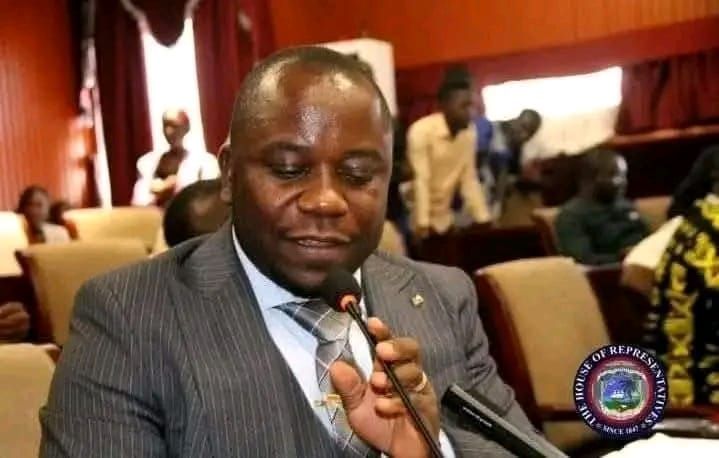
Representative Ernest Manseah of Nimba County District #4 has forcefully defended his decision to vote in favor of the Third Amendment to the ArcelorMittal Liberia (AML) Mineral Development Agreement (MDA), insisting that the revised deal delivers far more tangible benefits to Nimba County than previous agreements, despite strong opposition from some lawmakers and activists.Speaking to reporters during the Government of Liberia’s National Infrastructure Conference in Ganta, Rep. Manseah disclosed that the Nimba Legislative Caucus overwhelmingly supported the amendment. According to him, eight members present during the House session voted unanimously in favor, with only one caucus member absent.
“The caucus, I would say unanimously, voted for the Third Amendment,” Manseah said. “So I owe it to my people to explain why I signed this agreement, because whatever happens tomorrow affects their benefits.”Manseah explained that the caucus’ support followed years of unresolved demands placed before both the Liberian government and ArcelorMittal, locally referred to as “METAL.” Key among these were the paving of the road corridor from Sanniquellie through Saclepea to Yekepa, the renovation of Yekepa housing facilities, job opportunities for locals, scholarships, and stronger environmental protections.“We raised serious concerns about environmental mismanagement — water pollution, sewage, and environmental degradation,” he said.
“These were not new concerns. They are the daily complaints of our people.”According to Manseah, what persuaded the caucus to finally support the deal was the fact that many of these long-standing demands are now explicitly captured in the Third Amendment — unlike the previous MDAs, which he described as weak on timelines and enforcement.One of the most significant changes, Manseah said, is the introduction of binding timelines and penalties for non-compliance. Under the new amendment, AML must submit development plans for clinics, schools, and other community projects within three months. Failure to comply attracts a US$250,000 penalty after six months, another US$250,000 after an additional six months, and eventual termination of the agreement if obligations remain unmet after one year.
“Before now, there were no penalties. The company could delay endlessly,” Manseah stressed. “This time, there are consequences.”On the contentious issue of the Social Development Fund (SDF), Manseah acknowledged that the previous agreement provided about US$3 million shared among the three affected counties. Under the Third Amendment, that figure rises to approximately US$5 million annually.Crucially, he noted, affected communities in Nimba will now receive up to 50 percent of the county’s share — a sharp increase from the previous 20–25 percent.“If Nimba receives US$2.5 million, over US$1.2 million goes directly to affected communities,” he explained.
“If this money is properly used, many of the problems people are crying about can be addressed."Manseah also defended the controversial multi-user rail provision, which opens the rail corridor to other concessionaires. He argued that this move ends AML’s monopoly and creates additional revenue streams for communities and government, referencing the recently ratified Ivanhoe agreement as an example.“Whatever we could not get from AML alone, we will now get from others,” he said. “That is why opening the corridor is a good thing.”While acknowledging the strong resistance of Senator Nya Twayen, Manseah stopped short of dismissing the senator’s concerns.
Instead, he framed the disagreement as a matter of weighing pros and cons.“I’m not saying Senator Twayen is wrong,” Manseah said. “He has every right to advocate for more. But the question is: are the issues raised enough to reject the entire agreement?”He added that lawmakers must focus on what is written into law, not speculation about future failures. “The problem in Liberia is not always the law; it’s implementation,” he said.Manseah concluded by urging civil society, students, community leaders, and ordinary citizens to closely monitor the implementation of the agreement, warning that even the best-written MDA means nothing without public pressure.
“If we are weak in holding the company accountable, we will still see nothing,” he warned. “But if we stay on their backs, we can force implementation.”He maintained that while the agreement is not perfect, rejecting it outright would deny Nimba County significant gains.“We cannot treat this agreement like the devil,” Manseah said. “There are good things in it — and more good than bad. The rest depends on collective action.”
Author: P. Uriah Suah